

Why handcrafted clothing costs more: the full truth
TL;DR:
- Handcrafted clothing costs more due to the honest expenses of skilled labor, premium materials, and ethical wages.
- Its higher price reflects time-intensive craftsmanship, careful sourcing, and small-batch production that prioritize longevity.
Handcrafted clothing costs more because every element of its production carries a real, honest price. Skilled artisan labour, premium materials, ethical wages, and small-batch manufacturing cannot be compressed into the economics of mass production. You are not paying a premium for a label. You are paying for the hours, the hands, and the conviction behind each piece.
The core cost drivers, stated plainly:
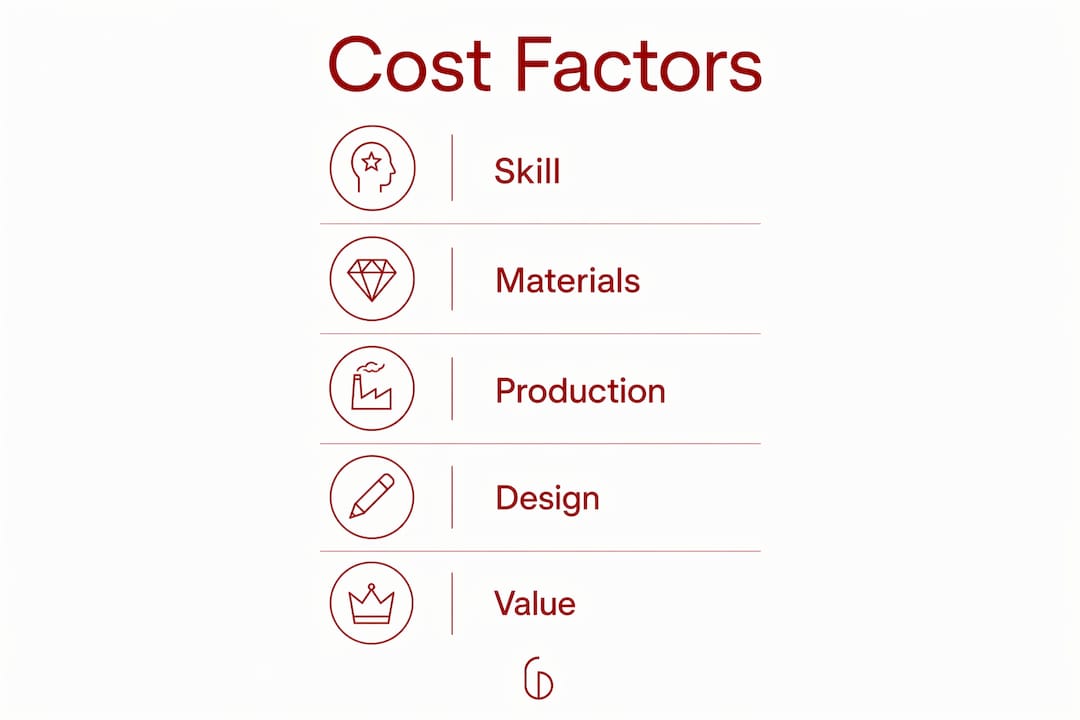
- Skilled labour takes hours or days per garment, not seconds per unit
- Premium materials such as organic cotton, substantial silks, and sustainable fibres cost significantly more than synthetic fast fashion alternatives
- Ethical wages mean artisans are paid continuously and fairly, not by the piece at punishing speed
- Small-batch production prevents costs from being spread across thousands of units, raising the price per garment
- Design and craftsmanship require sampling, fittings, and pattern precision that carry their own development costs
- Longevity means a well-made garment costs far less per wear over its lifetime than a cheap piece discarded after a handful of uses
Each of these factors is examined in full below.
1. Why handcrafted clothing costs more: the time and skill behind every piece
Artisan production is slow by design, and that slowness is the point. A hand-embroidered design can take anywhere from a few hours to a full day of continuous work at the hoop. A detailed motif, such as two scarlet macaws stitched by hand, requires approximately 24 hours of skilled embroidery. A machine produces the equivalent in seconds.
- Precision cutting, sewing, and finishing are each slower when done by hand
- Multiple quality control steps, including measurement verification, stitch review, and final presentation, require skilled staff at every stage
- Labour costs reflect continuous, fair employment rather than piecework rates that incentivise speed over quality
The irregularity of a human hand is not a flaw. It is what gives a handcrafted piece its character, its life. True craftsmanship embraces natural imperfections as marks of skill that no machine can replicate.
Pro Tip: When identifying genuine handcrafted clothing, examine the reverse side of the garment. Irregular thread paths, hand-tied knots, and slight variations in stitch tension are authentic signs of artisanal work. Uniform perfection on both sides usually indicates machine production.
2. Premium materials and the discipline of ethical sourcing
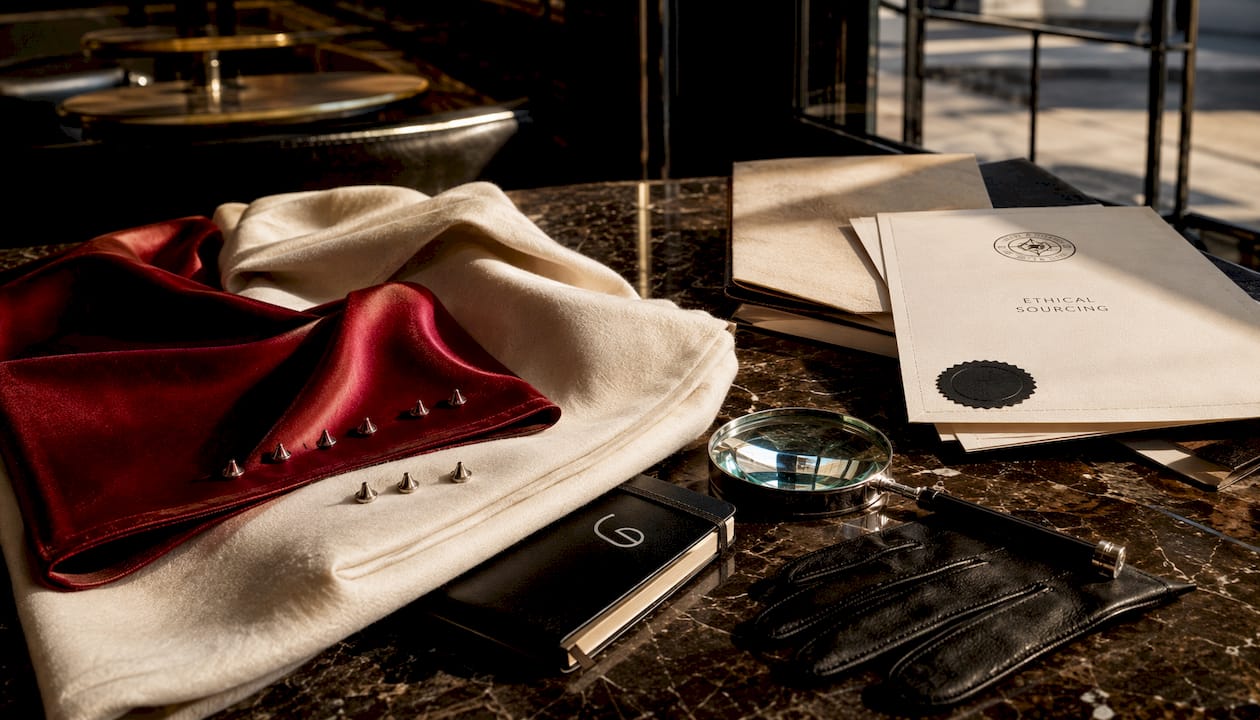
The fabric is never an afterthought in handcrafted fashion. Premium materials such as substantial silks, quality interfacings, and rich natural fibres are chosen for endurance, not for scalability or cost reduction. Organic cotton, sustainable viscose made from certified renewable wood sources, and specialty jacquards all cost considerably more than the synthetic blends and low-grade cottons used in mass production.
- Natural fibres are selected for their durability, drape, and comfort over time
- Eco-friendly AZO-free dyes cost more than cheaper synthetic alternatives, but protect artisans’ health and prevent carcinogenic compounds from entering waterways
- Materials are chosen to last years, not seasons, which raises input costs but reduces the long-term environmental burden
The dyes alone represent a deliberate ethical choice. AZO dyes are restricted in many countries because certain formulations break down into compounds classified as carcinogenic. Choosing to avoid them entirely is a decision made for the artisans who handle dyes daily, the rivers that receive runoff, and the people who ultimately wear the garment.
Understanding which fair fashion standards govern material sourcing and artisan wages helps explain why ethically produced garments carry a higher price at every stage of the supply chain.
3. The economics of small-batch and ethical production
Smaller production runs allow for greater quality control and more distinctive design, but they eliminate the economies of scale that make mass-market pricing possible. A factory producing thousands of identical units spreads development, sampling, and production costs across an enormous quantity. A handcrafted brand cannot. Each garment absorbs a proportionally larger share of every fixed cost.
- Fair wages mean artisans are paid whether or not there is a rush order, supporting stable livelihoods rather than precarious piecework
- Continuous employment sustains skills, supports families, and preserves the expertise that defines artisanal work
- Ethical production rejects zero-hours contracts and piece-rate systems that artificially suppress labour costs in mass manufacturing
- Small-batch production also means less overproduction, less excess inventory, and less waste
Paying people fairly costs more than exploiting them. That sentence is not a moral argument dressed as economics. It is simply accurate. The price difference between a handcrafted garment and a mass-market equivalent reflects, in large part, the difference between a wage that supports a life and one that does not.
4. How design philosophy and craftsmanship shape the final price
A handcrafted garment begins long before the first stitch. Concept, silhouette, fit testing, fabric selection, pattern development, and multiple rounds of revision all precede production. Extensive sampling, fittings, and pattern precision incur development costs that cannot be amortised across large volumes. For a small-batch producer, those costs are absorbed by each individual piece.
- Hand-cut patterns allow print alignment and precise silhouette control that automated cutting cannot achieve
- Natural stitched canvassing, as used in true luxury tailoring, shapes to the wearer’s posture and maintains structure for decades; fused interlinings used in fast fashion degrade quickly
- Design prioritises lasting style and fit over trend cycles, requiring more considered construction at every stage
- Higher development costs per piece reflect the refusal to rely on generic templates or shortcuts
The hidden labour behind design is substantial. Proportion, placement, lining, and construction each require rounds of adjustment. When a garment looks effortless, it is because the effort was absorbed entirely into the making.
5. Understanding cost per wear and the true value of a handcrafted garment
The upfront price of a handcrafted garment is rarely the honest measure of its cost. A well-made dress worn regularly over three years costs less per wear than a cheap garment discarded after seven uses.
- Quality materials and construction extend garment life considerably beyond fast fashion alternatives
- Handcrafted pieces are designed to be tailored if needed, kept for years, and worn across multiple occasions
- Emotional and aesthetic value contribute to how often a piece is actually worn, which directly affects cost per wear
The question shifts from “how much does this cost today?” to “how much value does this provide over time?” A garment that lasts a decade and is worn with genuine pleasure is not expensive. It is the most economical choice available. For guidance on building a wardrobe around this principle, Jeeyodee’s handcrafted luxury wardrobe guide offers a considered framework.
6. The social and environmental costs hidden in fast fashion pricing
Cheap clothing is not cheap. The costs exist. They have simply been moved. Fast fashion’s low prices are made possible by pushing real costs onto garment workers earning poverty wages, rivers absorbing untreated dye runoff, and communities bearing the health consequences of unregulated chemical use.
- Textile dyeing is one of the most polluting industrial processes in the world; in countries with weak environmental regulation, factories discharge untreated wastewater directly into rivers
- Garments discarded after a handful of wears enter a waste stream that textile recycling infrastructure cannot absorb; most end up in landfill, where synthetic fabrics take centuries to decompose
- Fast fashion garments are often designed for short-term use, with fading colours, loose stitching, and reduced comfort after repeated washing accelerating the replacement cycle
- Handcrafted clothing internalises these costs transparently: fair wages, quality materials, and responsible dyes are built into the price rather than hidden behind it
A €15 top sounds like a good deal. By the time it reaches you, someone has already paid the difference. That is not a metaphor. It is the operational reality of a supply chain built on the suppression of true costs.
7. Jeeyodee’s perspective on craftsmanship, exclusivity, and investment
At Jeeyodee, we do not make clothing. We produce permanent chapters. Each piece from the maison is individually numbered, strictly limited, and never reproduced. When a drop closes, it is closed. The garment you hold is the only one of its kind in the world that carries that number, and it will remain so.
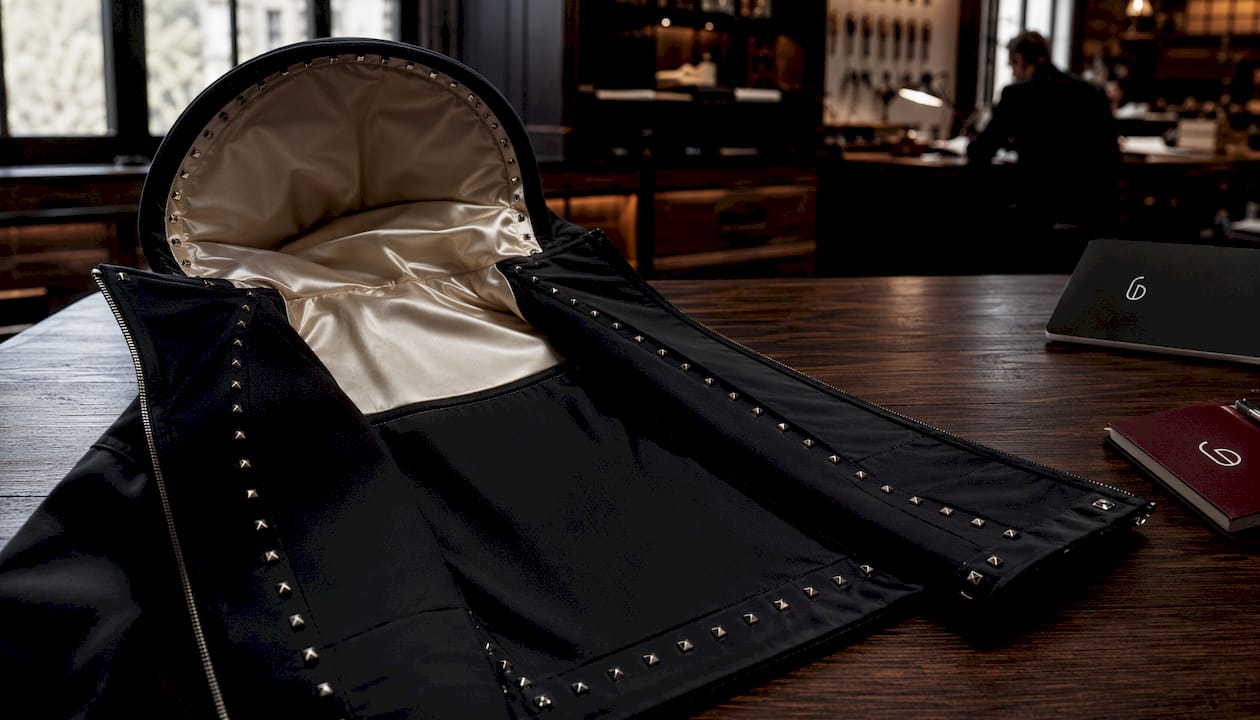
Our materials are chosen with the same conviction that governs our design philosophy. Egyptian silk hood linings, meticulously aligned Italian cone studs, heavyweight cotton constructed to endure. These are not details added for effect. They are the garment. The role of craftsmanship in fashion is precisely this: to make decisions that outlast the moment of purchase and sustain their meaning across years of wear.
Every Jeeyodee piece is made in Italy, slowly, by hands that understand what they are making. The price reflects that understanding. It reflects fair production, exceptional materials, and the irreducible cost of making something that will not need to be replaced. Collectible by nature, purposeful by design, and honest in its accounting of what genuine luxury requires.
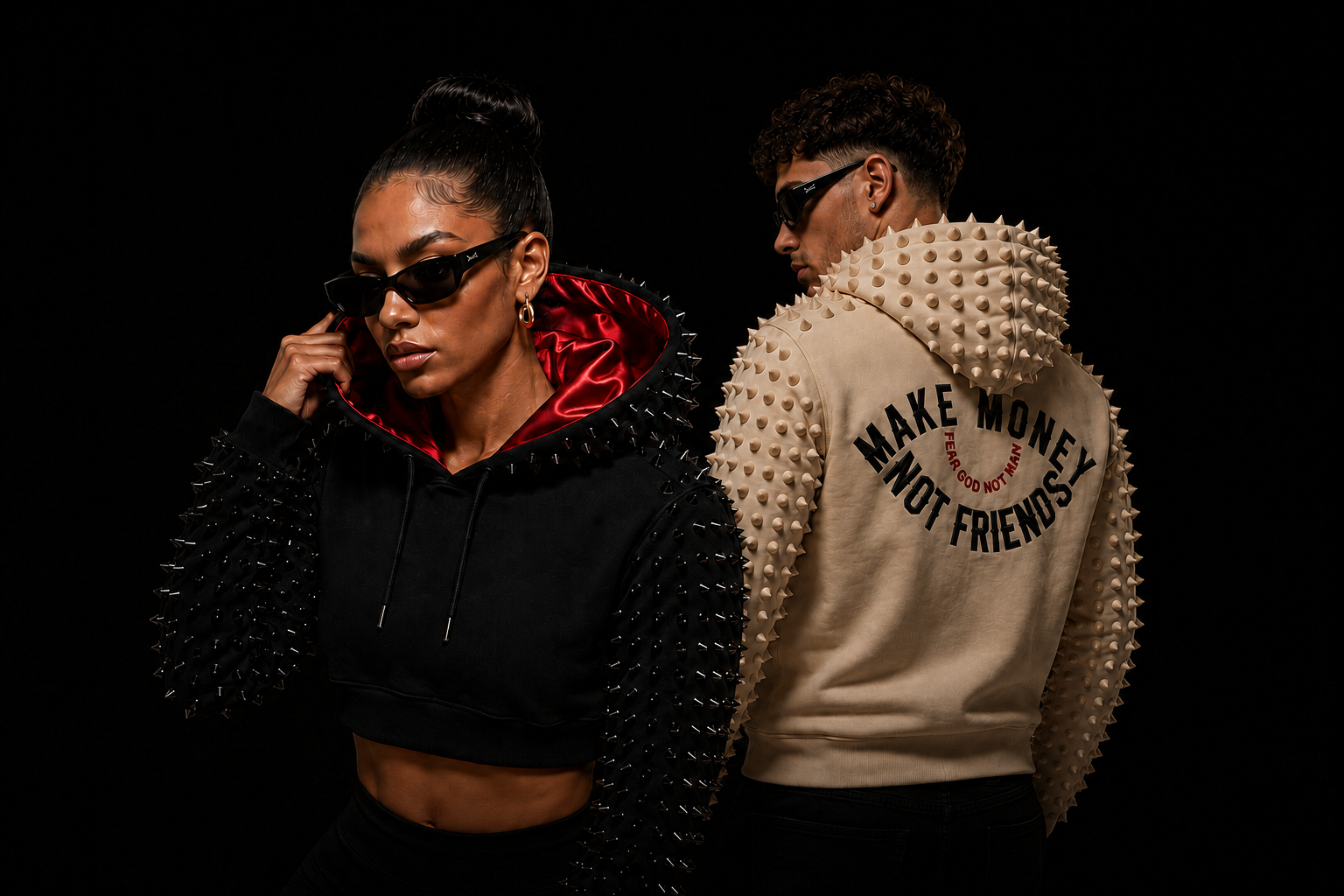
Jeeyodee’s numbered luxury pieces are produced once and never repeated. Each drop is a finite edition. When it is gone, it is gone.
Key takeaways
Handcrafted clothing costs more because it absorbs the true costs of skilled labour, ethical wages, premium materials, and considered design that mass production deliberately avoids.
| Point | Details |
|---|---|
| Skilled labour is the primary cost | Artisan work takes hours or days per piece; a hand-embroidered design alone can require a full day of continuous work. |
| Premium materials raise input costs | Organic cotton, sustainable fibres, and AZO-free dyes cost more than synthetic fast fashion alternatives, but protect artisans and the environment. |
| Small-batch production limits cost dilution | Fewer units mean each garment absorbs a larger share of development, sampling, and quality control costs. |
| Cost per wear favours handcrafted pieces | A well-made dress worn regularly over three years costs less per wear than a cheap garment discarded after seven uses. |
| Fast fashion hides its true costs | Poverty wages, environmental pollution, and disposability are the real price of cheap clothing, paid by workers and ecosystems rather than consumers. |
Jeeyodee’s view on the enduring value of handcrafted fashion
There is a particular kind of clarity that comes from wearing something made with full conviction. Not the clarity of a trend correctly followed, but the quieter certainty of a garment that was built to last, designed with purpose, and produced without compromise.
We believe fashion is one of the most direct expressions of what a person values. A handcrafted piece carries the decisions of everyone who made it: the artisan who spent hours on a single detail, the designer who refused to cut corners on construction, the producer who paid fair wages when cheaper options existed. You wear those decisions. They are present in the weight of the fabric, the precision of the finish, and the way the garment holds its shape across years of use.
The conversation around price in fashion has long been distorted by the assumption that cheaper is more rational. It is not. A garment that costs more upfront but lasts a decade, holds its form, and is worn with genuine pleasure is the more considered purchase. The longevity of luxury garments is not accidental. It is the direct result of decisions made at every stage of production, from material selection through to the final quality check.
Handcrafted fashion asks something of the person who buys it: patience, discernment, and a willingness to value permanence over convenience. We think that is a reasonable ask. The alternative, a wardrobe of disposable pieces that cost the earth in every sense, is the less rational choice, even if it appears cheaper in the moment.
FAQ
Why is handmade clothing more expensive than mass-produced alternatives?
Handmade clothing requires skilled artisan labour measured in hours per piece, premium materials chosen for durability, ethical wages paid continuously rather than by the unit, and small-batch production that prevents costs from being spread across thousands of garments. Each of these factors adds honest cost that mass production deliberately avoids.
What does cost per wear mean, and why does it matter for handcrafted pieces?
Cost per wear divides the price of a garment by the number of times it is worn. A well-made handcrafted dress worn regularly over three years costs less per wear than a cheap garment discarded after seven uses, making the higher upfront price the more economical choice over time.
How can you identify genuine handcrafted clothing?
Turn the garment inside out and examine the reverse side. Authentic handcrafted pieces show irregular thread paths, hand-tied knots, and slight variations in stitch tension. Uniform machine perfection on both sides, combined with a price that seems too low for the claimed construction, is a reliable indicator of mass production.
Is it cheaper to make your own clothes than to buy handcrafted pieces?
Rarely, once all costs are accounted for. Quality fabric, pattern development, fittings, and the time required to achieve a professional finish represent a significant investment. For most people, the true cost of making a garment at home, including materials and hours of skilled work, exceeds the retail price of a comparable handcrafted piece from an ethical producer.
What is the 3-3-3 rule for clothing?
The 3-3-3 rule is a personal wardrobe framework, not an industry standard, and definitions vary. A common version suggests choosing three items from your existing wardrobe and wearing them in three different combinations for three weeks, encouraging considered use of what you already own rather than continuous purchasing. It aligns naturally with the handcrafted philosophy of buying less and wearing more.